Spain
🇪🇸 Madrid
A late-night, walkable capital with a long riverside park, an easy metro, and free evening hours at its biggest museums.
Best for
Safety
Good, with normal caution
Typical trip
4–7 days
Madrid is a city built around going out late. Dinner starts after nine, squares stay busy past midnight, and the centre is compact enough to walk between most of what you’d want to see.
For a working trip the catch is the clock. Madrid is six hours ahead of the US East Coast, so a US workday runs into the evening there. It suits people who can shift their hours or take real days off; see the workation guide.
Travelling here alone
- Madrid eats late: lunch around 2pm, dinner from 9pm. Arriving early means a quiet room, which is the easiest time to take a seat at the bar alone.
- Standing at the bar for tapas is normal and suits one or two people. Nobody expects a booking.
- Pickpocketing is the realistic risk, around Sol, on the Metro and at the Rastro. Keep your phone out of back pockets.
- The big museums have free evening hours, which makes for a cheap, easy evening on your own.
Where to base yourself
Central and walkable to the Prado, the Plaza Mayor and the old town. The busiest part of the city, and the easiest to find your way back to at night.
Tapas streets around Cava Baja, the El Rastro flea market on Sunday mornings, and in Lavapiés the most mixed, international neighbourhood in the centre.
Malasaña has the cafés where people bring laptops. Chamberí next door is quieter and residential.
The basics
- Getting around
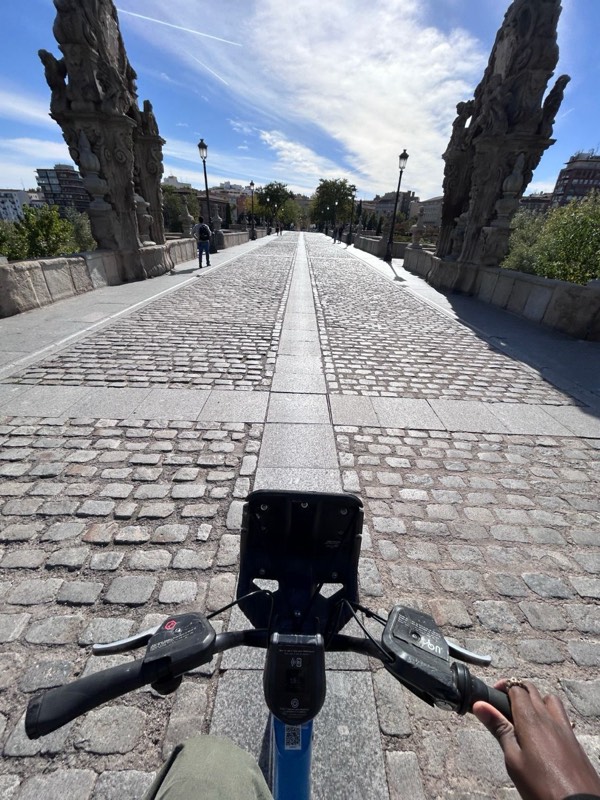
- The Metro is extensive and frequent and runs until about 1:30am. A rechargeable Tarjeta Multi covers single rides. BiciMAD is the city's public bike scheme, and the Madrid Río park gives you kilometres of car-free riverside to ride.
- Money
- Euro. Cards are accepted almost everywhere, including most bars. Keep a little cash for older tapas bars and the Rastro.
- Language
- Spanish. English is common in the centre and in hotels, less so in neighbourhood bars, where a little Spanish goes a long way.
- When to go
- Spring (April to June) and autumn (September to November) are best. July and August are very hot, and many locals leave. In October the Fiesta de la Trashumancia sends flocks of sheep through the centre; in mid-May the San Isidro festivities fill the old town.
Worth your time
Each autumn shepherds walk their flocks through central Madrid along an old drove road, to keep the right of way alive. Free, outdoors, crowded and easy to join alone.
A long riverside park built over a buried motorway. Pick up a BiciMAD bike and ride it past the Puente de Toledo and the hedge gardens below the bridge.
The open-air flea market around La Latina on Sunday mornings. Go early, keep your bag in front of you, and stay for tapas on Cava Baja after.
One of the world's great art museums, free for the last two hours most days. Check the current times before you go.
By Dom — Visited. The photos on this page and in the About section are his own.